Modi-Macron set target to double trade as India, France widen nuclear and defence ties
India and France used a meeting in Nice to push their partnership deeper, with new commitments on trade, nuclear energy, defence and technology. The talks also touched visas, student mobility and the wars in West Asia and Ukraine.

NewX Editorial · Editorial Desk NewX uses AI tools to help research, draft and translate stories. Read our Editorial Policy →
Published:
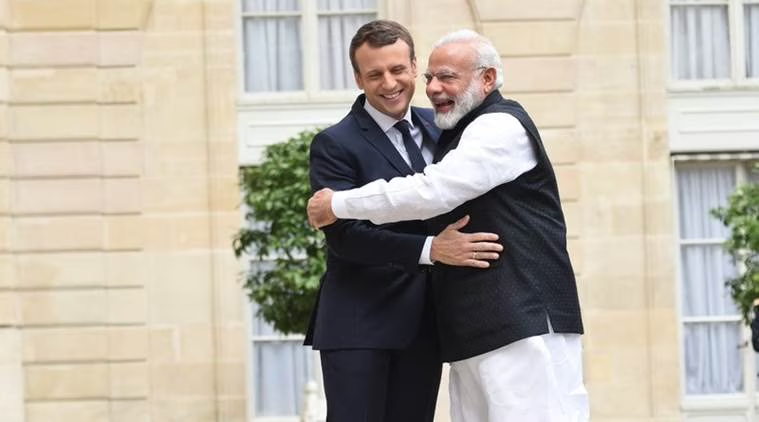
India and France used a meeting in Nice on Monday to sharpen a relationship that now stretches from fighter jets and reactors to artificial intelligence and student exchanges. The two sides announced 13 outcomes, including a plan to double bilateral trade over the next five years and a fresh push on civil nuclear cooperation.
Trade, technology and economic security
The biggest commercial signal from the talks was a commitment to raise India-France trade to twice its current level within five years. That sits alongside an innovation roadmap aimed at critical and emerging technologies, plus a new economic security dialogue and an additional working group on AI governance.
The agreement set also included 19 institutional deals linked to the two countries' innovation ecosystems. India and France have been trying to move their ties beyond government-to-government diplomacy and into deeper business, research and technology links.
Nuclear energy back on the table
Civil nuclear cooperation remained one of the core themes. Foreign secretary Vikram Misri said France's nuclear firms could now look at direct participation in India's nuclear sector, either on their own or with Indian private companies.
He said that opportunity extends to both conventional reactors and newer small modular reactors, as India works through its SHANTI Act. The law is expected to open the door to wider participation in the sector, including advanced reactor designs.
For France, nuclear power has long been one of its strengths. For India, which wants more low-carbon electricity and more private investment in energy, the timing matters.
Defence tied to local manufacturing
Defence cooperation was discussed in the same practical tone. Modi stressed co-development, co-design, co-production and co-manufacturing, a message that fits squarely with India's Make in India push.
Misri said the underlying idea was simple: any defence platform the two countries work on should include local manufacturing. That approach will be watched closely in the coming months, especially with talk of a possible deal for 114 Rafale fighter jets.
French ambassador Thierry Mathou had earlier told TOI that such a procurement would align with Make in India. No agreement was announced in Nice, but the public comments show where the conversation is headed.
People ties, visas and campus plans
The meeting was not just about hardware and trade figures. The leaders also discussed travel, education and the movement of talent.
Modi thanked Macron for the fast rollout of visa-free transit for Indian nationals at French airports. The Indian readout said the two sides also talked about expanding mobility for students and professionals, and about mutual recognition of educational qualifications.
India invited French universities to open campuses in the country under the National Education Policy 2020. That would give the partnership a more visible footprint for students, researchers and employers on both sides.
- Trade target: India and France want bilateral trade doubled in five years.
- Energy: civil nuclear cooperation, including small modular reactors, is a priority.
- Defence: both sides are pushing co-production and local manufacturing.
- Technology: new work on AI governance and critical technologies is planned.
- People links: visas, student mobility and campus expansion were part of the talks.
West Asia, Ukraine and the G7
Modi and Macron also spoke about West Asia and Ukraine, though neither side gave many details. France wants India to join a defensive coalition it is building with the UK to protect freedom of navigation in the Strait of Hormuz after the conflict ends. India has not said publicly where it stands, although it has taken part in meetings hosted by France and Britain on the issue.
The two leaders also touched on the wider role of the India-France Special Global Strategic Partnership. India said Modi thanked Macron for involving New Delhi in discussions ahead of the G7 summit, which Modi is due to attend after travelling on to Slovakia and then returning to France on Tuesday.
The Nice meeting showed how the relationship is broadening without losing its hard-edged strategic core. For both governments, the aim now is not just warmer diplomacy, but more business, more technology transfer and more joint work in sectors that shape power at home and abroad.
Sources
Frequently asked questions
What trade goal did India and France set in Nice?
They agreed to raise bilateral trade to twice its current level within five years. The commitment was part of 13 outcomes announced after the meeting.
What did the leaders say about civil nuclear cooperation?
Foreign secretary Vikram Misri said France’s nuclear firms could look at direct participation in India’s nuclear sector, either alone or with Indian private companies. He said this could cover conventional reactors and small modular reactors.
How did the talks address defence cooperation?
Modi stressed co-development, co-design, co-production and co-manufacturing. Misri said any defence platform the two countries work on should include local manufacturing.
What people-to-people issues were discussed?
The leaders discussed visa-free transit for Indian nationals at French airports, as well as mobility for students and professionals. India also invited French universities to open campuses in the country under the National Education Policy 2020.
Did the meeting produce a Rafale fighter jet deal?
No agreement was announced in Nice. However, the article says the comments suggest a possible deal for 114 Rafale fighter jets remains under discussion.
Related
Ofgem’s lower standing charges plan may ease some bills, but it will not fix the deeper pressures weighing on Burnham’s growth pitch
Britain’s regulator is forcing suppliers to offer lower standing charge tariffs from January 2026, yet the change is expected to shift costs rather than cut total bills, just as inflation, cold weather and uneven regional growth keep squeezing households and cities outside the South.

Trump cites India, says lower rates could lift U.S. growth to 14% or 15%
The U.S. president used a White House briefing to argue that cheaper borrowing costs and faster trade deals could push American growth far above current levels. He also pointed to fresh agreements with Thailand and the Philippines and said more were on the way.

RBI warns cloud and tech concentration could turn one outage into a wider banking shock
Deputy governor Rohit Jain said banks are leaning on a small set of cloud, technology and model providers, creating a risk that disruption at one vendor could spread across multiple institutions.

Government signals higher ethanol blends for cars will be tied to flex-fuel vehicles
Tarun Kapoor says India has already reached the E20 stage and any move beyond that is likely to be limited to flex-fuel vehicles, while the government looks for new uses for surplus ethanol.

No comments yet
Be the first to comment.
Join the conversation