Taliban Defends Afghanistan Protest Ban as Rights Groups Warn of Tighter Crackdown
The new police law bars all demonstrations and comes after deadly force was used against women protesting in Herat earlier this year.

NewX Editorial · Editorial Desk NewX uses AI tools to help research, draft and translate stories. Read our Editorial Policy →
Published:
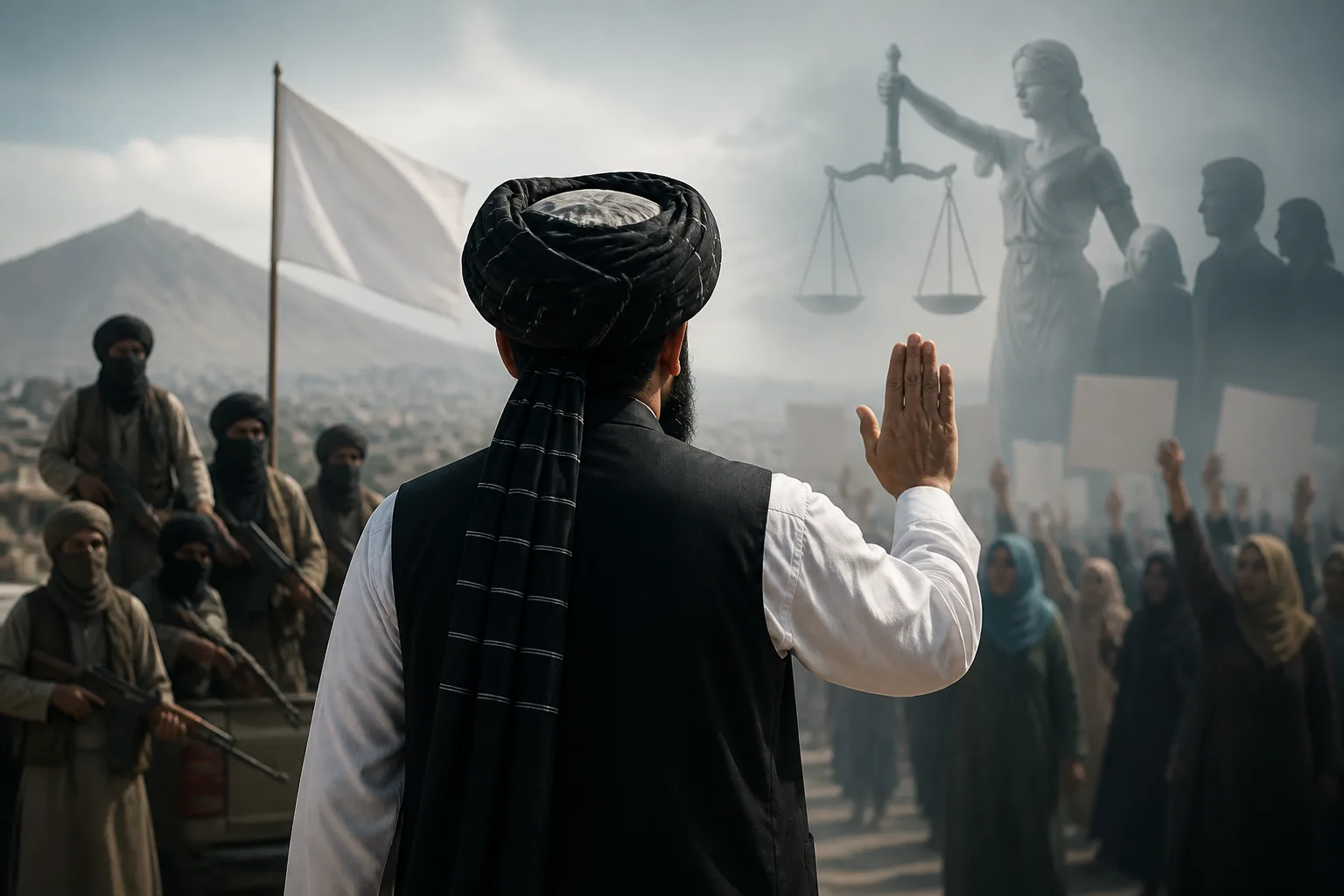
The Taliban government has defended a nationwide ban on protests, saying the new rule fits within Islamic law, even as rights groups say it tightens the pressure on dissent in Afghanistan and follows a year of heavy-handed responses to women-led demonstrations.
Taliban spokesman Zabihullah Mujahid said the law is in line with Islamic principles and argued that protests have no place in that system. He said people with grievances should raise them directly with the authorities instead of taking to the streets.
A blanket ban backed by the Taliban
The protest restriction is part of an 84-page police law published by the Justice Ministry. The text states that all types of protests are banned across the country.
Mujahid said the order is meant to prevent damage to private property and stop people from wasting time. He also drew a distinction between Afghanistan under Taliban rule and countries that use democratic or republican systems.
The government made its case on Wednesday, a day after the ban drew fresh public criticism. Taliban officials have not said the law is temporary or limited to specific kinds of gatherings.
Rights groups warn of a wider squeeze on dissent
Human Rights Watch called the measure another step in what it described as the Taliban’s effort to crush dissent. Amnesty International said the broader changes to law enforcement amount to a sweeping assault on human rights, and placed the protest ban among the harshest provisions.
The criticism lands in a country where public demonstrations are already rare. Even so, the latest ban formalises a practice that rights groups say has been enforced through intimidation, arrests and violence.
An Afghan government response to earlier requests for comment on the protest ban was not recorded in the material available here. The Taliban has continued to present its rule as rooted in Islamic law, while rights monitors say the effect has been to narrow the space for any public challenge.
Herat still hangs over the debate
The dispute over the new law cannot be separated from events in Herat in June. United Nations experts said at least two people were killed there when security forces opened fire on a women’s rights protest. Human Rights Watch said a child was killed and others were hurt when Taliban forces used excessive force to disperse demonstrators.
Those protests were sparked by arrests of women accused of violating dress rules, part of a wider set of restrictions that already include demands linked to the burka or chador with face covering and a ban on perfume. The crackdown deepened an atmosphere of fear around public protest long before the new ban was published.
The Taliban has, over the years, narrowed education and expression for women and girls and moved against criticism in public and online. The new protest ban adds another formal barrier to public dissent at a time when the country’s rights situation is already among the most closely watched in the world.
Why this matters now
The Taliban is not just policing gatherings. It is setting out a legal framework that treats protest itself as illegitimate. That matters because it shifts the conflict over rights away from the street and into the state’s own rulebook.
For Afghans who have already seen universities closed to women, public criticism punished and demonstrations met with force, the ban signals that even peaceful assembly is now outside the space the authorities are willing to tolerate.
- The Justice Ministry published an 84-page police law banning all protests.
- Zabihullah Mujahid said the ban complies with Islamic law.
- Human Rights Watch and Amnesty International condemned the move.
- UN experts and Human Rights Watch said Taliban forces used lethal force against Herat protesters in June.
- The June protests were tied to arrests of women over dress-code violations.
Sources
tandfonline.com
amnesty.org
newindianexpress.com
facebook.com
instagram.com
Frequently asked questions
What does the new Taliban protest rule do?
The rule bans all types of protests across Afghanistan. It is part of an 84-page police law published by the Justice Ministry.
How did the Taliban defend the ban?
Spokesman Zabihullah Mujahid said the law is in line with Islamic principles and that protests have no place in that system. He said people with grievances should go directly to the authorities.
How have rights groups responded to the ban?
Human Rights Watch called it another step in the Taliban’s effort to crush dissent. Amnesty International said the wider law enforcement changes amount to a sweeping assault on human rights.
What happened in Herat that is mentioned in the story?
UN experts said at least two people were killed when security forces opened fire on a women’s rights protest in June. Human Rights Watch said a child was killed and others were hurt when Taliban forces used excessive force.
What sparked the June protests in Herat?
The protests were sparked by arrests of women accused of violating dress rules. The article says those restrictions already included demands linked to the burka or chador with face covering and a ban on perfume.
Related
Tajikistan moves to quit the ICC as pressure on the court deepens
Dushanbe has notified the United Nations that it will leave the Rome Statute, joining a string of departures that have piled pressure on the International Criminal Court and raised fresh questions about its future.
Ukraine Says It Sank Russian Warship Off Libya, Opening a New Front in the Maritime War
Kyiv says seven naval drones hit the Merkury near Benghazi, a strike that Libya says damaged the vessel and triggered a fire as investigators assess the fallout far from the Black Sea.

Shekhawat urges SCO nations to turn shared heritage into trust at new civilisational forum in Delhi
India’s first SCO Civilisational Dialogue Forum opened at Purana Qila with ministers and delegates from across the bloc, while New Delhi used culture to signal that people-to-people contact can still move forward even when politics remains tense.
Russian missiles and drone crash into Poland as Ukraine endures major strike
Poland says three Russian objects crossed its airspace during a barrage on Ukraine, calling it an intentional provocation. The incident sharpened fears that Moscow’s war is spilling deeper into Nato territory.

No comments yet
Be the first to comment.
Join the conversation