Traffic through Hormuz remains limited as ship owners wait for clearer rules
President Donald Trump said the Strait of Hormuz had reopened and ships were already moving again. But vessel trackers showed a cautious picture on Monday, with many ships still holding back while owners waited for clearer security and transit rules.

NewX Editorial · Editorial Desk NewX uses AI tools to help research, draft and translate stories. Read our Editorial Policy →
Published:
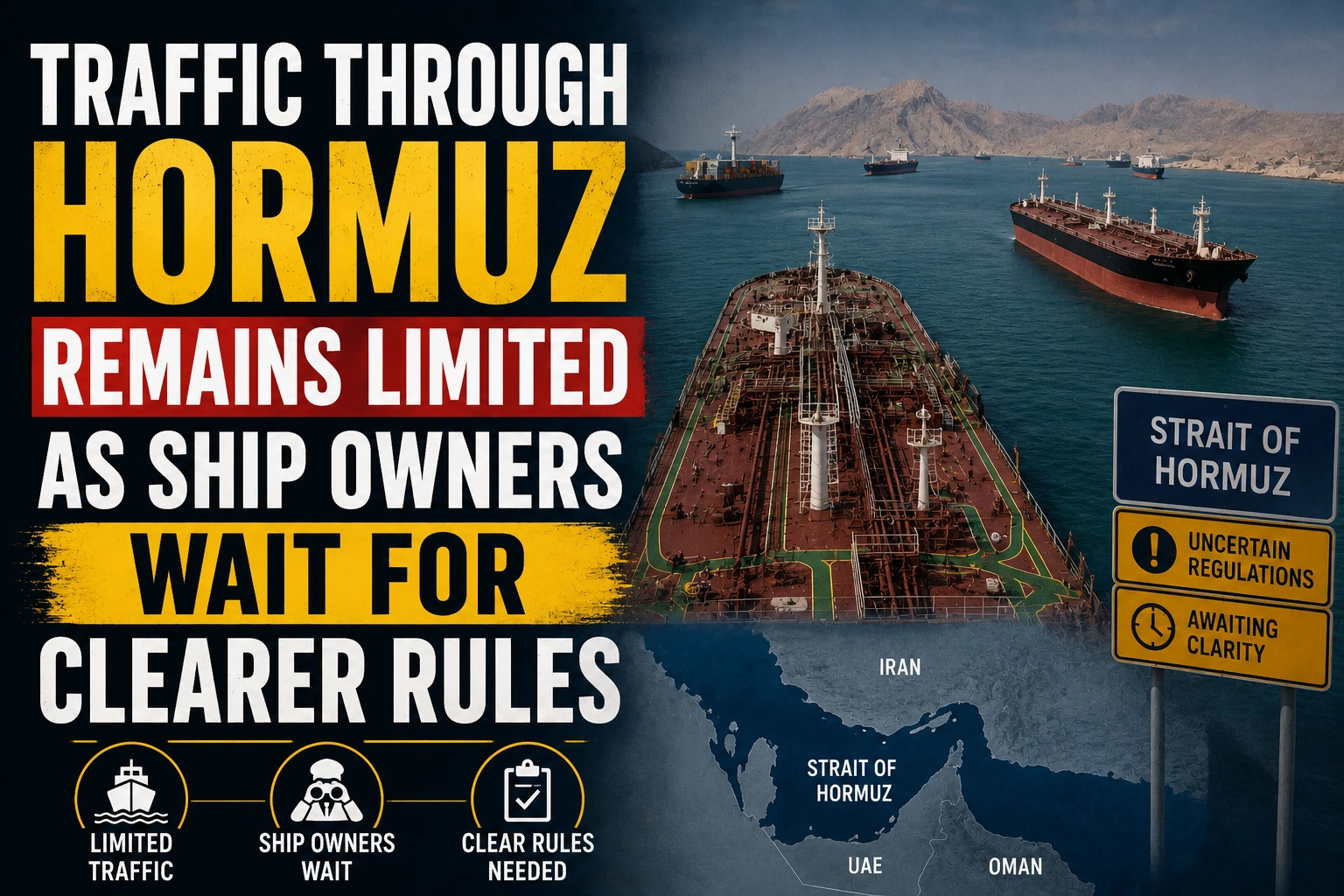
Shipping through the Strait of Hormuz stayed limited on Monday, even after President Donald Trump announced a peace deal with Iran and said the waterway had been reopened. Vessel-tracking data showed only a handful of ships moving through the chokepoint, while many others remained bunched near Iran’s Qeshm and Larak islands, south of the strait and around Oman’s Shinas port.
The gap between the White House message and what ships were actually doing matters because Hormuz is one of the world’s most sensitive sea lanes. Any hesitation there quickly feeds into freight costs, delivery times and fuel supplies across Asia and beyond.
Ships still waiting on the edges of the strait
Among the vessels that did cross was Petronet LNG’s Disha, which is due to reach Dahej on June 18. Since the conflict began, 15 India-bound ships, including 10 Indian-flagged vessels, have gone through the strait.
Even so, the backlog remains large. Another 13 Indian-flagged ships carrying 325 seafarers are still west of the waterway, waiting for conditions to settle enough for a normal transit.
Lloyd’s List, the maritime intelligence publication, estimates that about 600 ships are stranded west of the chokepoint. That figure shows how slowly operators are moving, despite the political headlines.
Trump says the route is open, but shippers want proof
Trump said he had authorised the reopening of the Strait of Hormuz and the removal of a U.S. naval blockade. He later said ships were already moving along the route near Oman.
Shipping companies are not taking that at face value. They want clearer instructions on how transit will work, and whether the route will return to the old system of largely unrestricted passage through the central traffic separation lanes.
That caution has a simple reason. In shipping, promises from governments matter far less than predictable conditions at sea. If captains and owners do not know which corridor is safe, or what delays may follow, they hold back.
Fees, safety and the question of control
Iran’s foreign ministry said on Monday that Tehran did not plan to impose transit tolls. It did say maritime service fees could be charged for navigation and environmental protection.
That distinction is important. Shipping lines can usually plan around known fees, but they cannot easily price in uncertainty about who controls passage or what rules may change from one crossing to the next.
Capt. Ritesh Kumar, who has crossed the strait around 150 times, said the passage had traditionally worked like open sea transit, with no payments to any country and no reporting requirements. He contrasted that with Singapore and the Malacca Strait, where reporting is mandatory for safety of navigation.
Industry groups say the risk is still unclear
Jakob Larsen, chief safety and security officer at Bimco, said the statements from the United States and Iran did not give enough detail on timing or safe routes. He said the security picture remained unstable and shipowners should keep carrying out careful risk checks before entering the area.
That warning reflects the mood across the industry. Even with a peace announcement in place, operators are treating Hormuz as a live risk zone until they get firmer confirmation that traffic can move without interruption.
For now, the message from the waterway is plain. Political announcements have not yet turned into normal shipping patterns, and the world’s tanker and cargo fleets are still waiting for the strait to feel open again.
Sources
Frequently asked questions
Did ships actually resume normal traffic through the Strait of Hormuz after the peace announcement?
No. Vessel-tracking data showed only a handful of ships moving through the strait, while many others remained waiting nearby.
How many India-bound ships had crossed the strait since the conflict began?
Fifteen India-bound ships had gone through the strait, including 10 Indian-flagged vessels.
How many Indian-flagged ships were still waiting west of the waterway?
Another 13 Indian-flagged ships carrying 325 seafarers were still west of the waterway, waiting for conditions to settle.
What did Iran say about charges for using the strait?
Iran’s foreign ministry said it did not plan to impose transit tolls. It said maritime service fees could be charged for navigation and environmental protection.
Why are shipping companies still cautious even after Trump said the route was open?
They want clearer instructions on how transit will work and whether the route will return to unrestricted passage through the central traffic separation lanes. Industry groups also said the security picture remained unstable.
Related
Tajikistan moves to quit the ICC as pressure on the court deepens
Dushanbe has notified the United Nations that it will leave the Rome Statute, joining a string of departures that have piled pressure on the International Criminal Court and raised fresh questions about its future.

Ukraine Says It Sank Russian Warship Off Libya, Opening a New Front in the Maritime War
Kyiv says seven naval drones hit the Merkury near Benghazi, a strike that Libya says damaged the vessel and triggered a fire as investigators assess the fallout far from the Black Sea.
Shekhawat urges SCO nations to turn shared heritage into trust at new civilisational forum in Delhi
India’s first SCO Civilisational Dialogue Forum opened at Purana Qila with ministers and delegates from across the bloc, while New Delhi used culture to signal that people-to-people contact can still move forward even when politics remains tense.

Russian missiles and drone crash into Poland as Ukraine endures major strike
Poland says three Russian objects crossed its airspace during a barrage on Ukraine, calling it an intentional provocation. The incident sharpened fears that Moscow’s war is spilling deeper into Nato territory.

No comments yet
Be the first to comment.
Join the conversation