Vizag’s Velampeta slum redevelopment to give 177 families free flats, rent support during construction
The state has cleared a pilot redevelopment in One Town’s Velampeta area, where 177 families are set to get new homes in a high-rise complex and monthly rent help while work is under way.

NewX Editorial · Editorial Desk NewX uses AI tools to help research, draft and translate stories. Read our Editorial Policy →
Published:
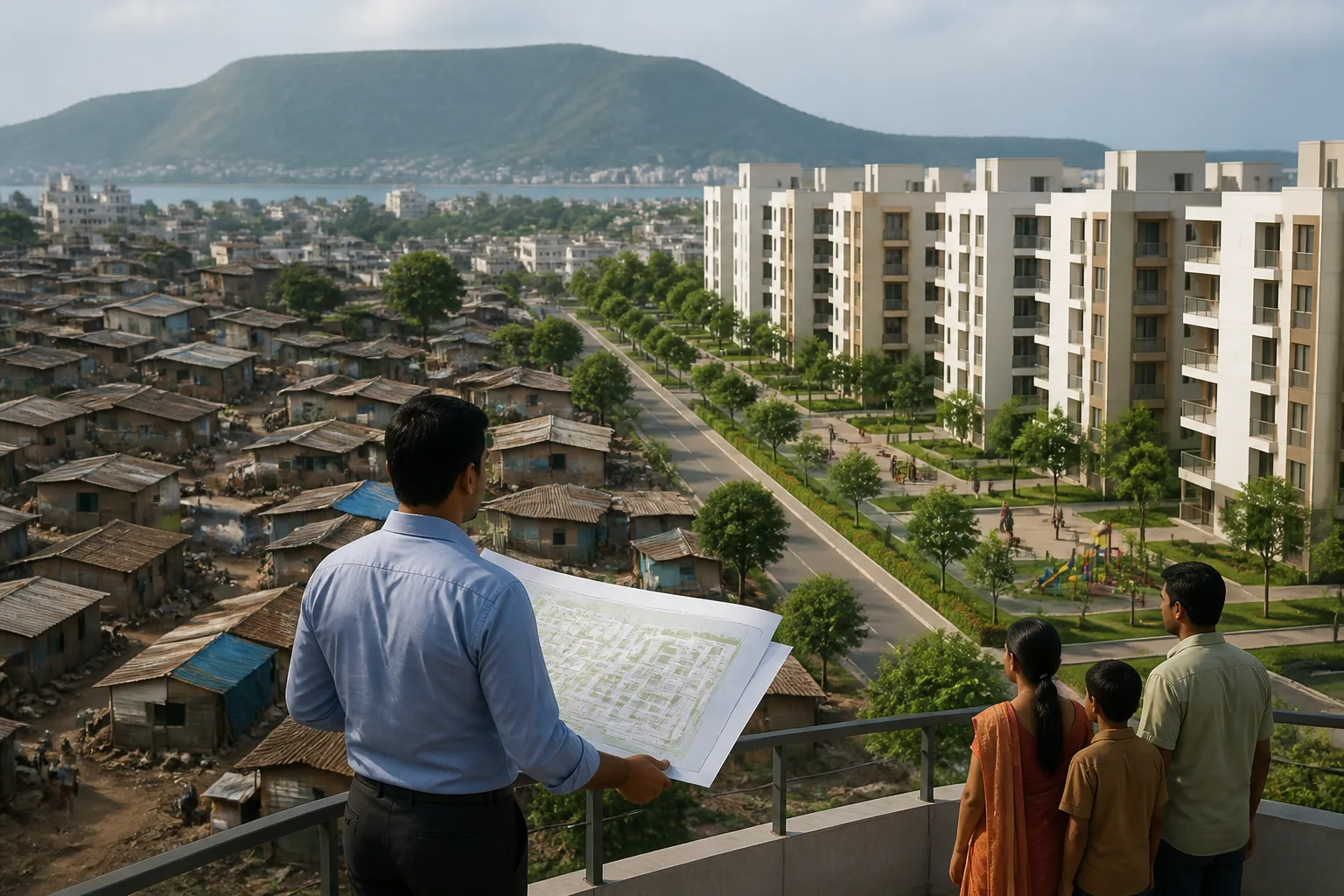
Visakhapatnam’s Velampeta slum is set for a major rebuild that will move 177 families into free flats, with the government also promising monthly rent support while construction is under way. The project matters because it is being pushed as a pilot for how the city, and possibly the state, handles dense inner-city settlements without sending residents far from where they live and work.
What the project covers
The Greater Visakhapatnam Municipal Corporation has planned a residential complex for the families living in Velampeta, near Poorna Market in the One Town area. The proposal calls for a high-rise block on a compact site and is being treated as an in-situ redevelopment project, meaning residents are meant to stay tied to the same neighbourhood.
Documents and public updates on the project point to 177 housing units for 177 beneficiary families. One version of the plan describes a G+12 structure, while other updates describe the project as a modern residential complex for the same number of families.
The cost has been put at about Rs 40 crore in project briefings. The project is also being framed as a pilot under the state’s urban redevelopment approach, with officials presenting it as a possible model for other slum areas.
How residents are meant to be kept afloat
During construction, the families are expected to receive rent assistance of Rs 3,000 a month. That support is meant to help households manage the temporary disruption while they wait for the new flats to be completed.
The redevelopment plan is being discussed alongside broader urban housing work in Visakhapatnam, where officials have also looked at transforming Indira Nagar into a high-rise residential project. That site is slated for a G+6 building for 110 beneficiary families, showing that the city is moving multiple slum pockets into the same redevelopment framework.
For Velampeta, the focus is on keeping people in the same locality rather than shifting them to distant relocation sites. That is the core political and practical appeal of in-situ housing, especially in a crowded city where access to work, schools and markets can be lost quickly if families are moved away.
A state-backed pilot with wider ambitions
The Andhra Pradesh government has already approved the Velampeta project. One government order cleared the redevelopment and set the stage for the housing work to begin, while state-level meetings chaired by the Municipal Administration and Urban Development department had earlier finalised steps for permanent housing for the 177 families.
Officials have described the project as a pilot under the Visakhapatnam Economic Region and a possible blueprint for future slum redevelopment. That makes the outcome at Velampeta bigger than one neighbourhood. If the model works, it could shape how other settlements are rebuilt across Andhra Pradesh.
There is also a structural innovation in the way the project is being planned. Briefings on the project say it will be executed on a Design, Build, Finance and Transfer basis, with the use of transferable development rights mentioned in the approval framework. The government has also linked the project to AP Urban Infrastructure Asset Management Limited.
Why Velampeta matters
Velampeta sits in a part of Visakhapatnam where land is tight and demand is high. That makes redevelopment harder, but it also makes the project significant. The city is not just adding housing. It is trying to prove that older inner-city slums can be rebuilt into formal housing without breaking the social and economic links that keep communities alive.
The approval has drawn attention because the project has been held up as the state’s first slum rehabilitation authority-style effort and as a test case for future work. It is one of the clearest signs yet that Andhra Pradesh wants to turn slum redevelopment into a repeatable urban policy, not a one-off housing scheme.
- 177 families in Velampeta are covered by the redevelopment plan.
- Residents are set to receive free flats in the new complex.
- Monthly rent support of Rs 3,000 is planned during construction.
- The project has been approved by the Andhra Pradesh government.
- Officials are presenting it as a pilot for future slum redevelopment in the state.
For families who have lived in Velampeta for decades, the promise is simple: a permanent home in the same area, without the long wait or uncertainty that often shadows urban housing plans. The real test will be whether the project delivers that promise on the ground.
Sources
timesofindia.indiatimes.com
deccanchronicle.com
projectxindia.com
timesofindia.indiatimes.com
wuf.unhabitat.org
timesofindia.indiatimes.com
x.com
Frequently asked questions
How many families are covered by the Velampeta redevelopment plan?
The plan covers 177 beneficiary families in Velampeta. Documents and updates on the project refer to 177 housing units for 177 families.
What will the families receive under the project?
They are set to get free flats in the new residential complex. During construction, they are also expected to receive Rs 3,000 a month as rent assistance.
Where is the Velampeta project located?
The project is for the Velampeta slum near Poorna Market in the One Town area of Visakhapatnam. It is being planned on a compact site as a high-rise residential complex.
Has the government approved the project?
Yes, the Andhra Pradesh government has already approved the Velampeta project. A government order cleared the redevelopment and set the stage for the housing work to begin.
Why is the project being described as important?
It is being pushed as a pilot for how the city and possibly the state can handle dense inner-city settlements without relocating residents far away. Officials say it could become a model for future slum redevelopment in Andhra Pradesh.
Related
Ofgem’s lower standing charges plan may ease some bills, but it will not fix the deeper pressures weighing on Burnham’s growth pitch
Britain’s regulator is forcing suppliers to offer lower standing charge tariffs from January 2026, yet the change is expected to shift costs rather than cut total bills, just as inflation, cold weather and uneven regional growth keep squeezing households and cities outside the South.

Trump cites India, says lower rates could lift U.S. growth to 14% or 15%
The U.S. president used a White House briefing to argue that cheaper borrowing costs and faster trade deals could push American growth far above current levels. He also pointed to fresh agreements with Thailand and the Philippines and said more were on the way.

RBI warns cloud and tech concentration could turn one outage into a wider banking shock
Deputy governor Rohit Jain said banks are leaning on a small set of cloud, technology and model providers, creating a risk that disruption at one vendor could spread across multiple institutions.

Government signals higher ethanol blends for cars will be tied to flex-fuel vehicles
Tarun Kapoor says India has already reached the E20 stage and any move beyond that is likely to be limited to flex-fuel vehicles, while the government looks for new uses for surplus ethanol.

No comments yet
Be the first to comment.
Join the conversation