Andhra Pradesh’s 23 Urban Local Bodies Vote Again, With Turnout and Control of Town Halls at Stake
Polling on November 26 will decide 23 urban local bodies across Andhra Pradesh, with the TDP-led alliance looking to extend its recent sweep and the YSRCP trying to recover ground in a set of local contests shaped by higher turnout expectations, unopposed wins and closely watched civic strongholds.

NewX Editorial · Editorial Desk NewX uses AI tools to help research, draft and translate stories. Read our Editorial Policy →
Published:
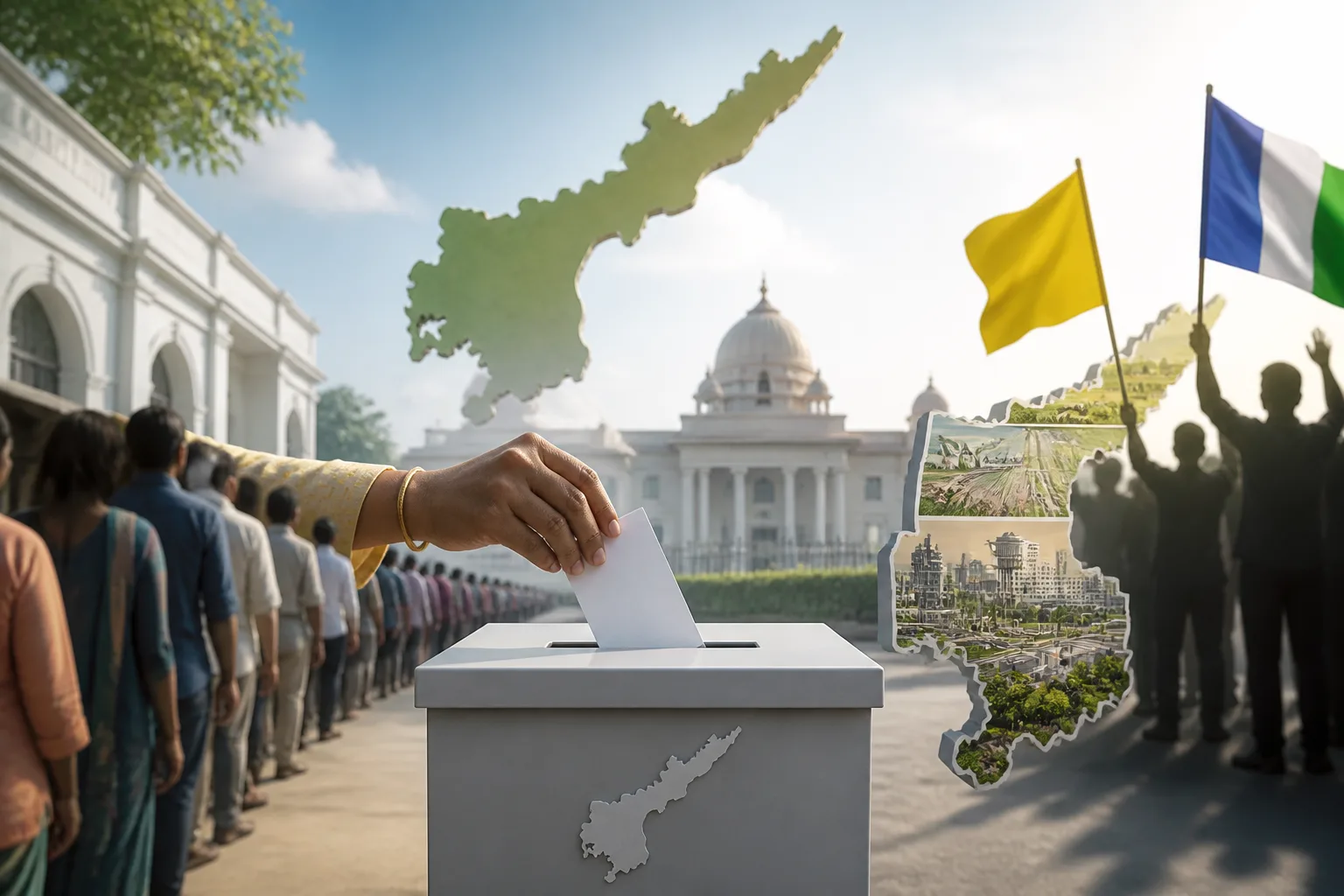
Andhra Pradesh is heading to the ballot box again, this time for elections in 23 urban local bodies that will test whether the Telugu Desam Party led alliance can keep up its recent momentum in towns and cities, or whether the YSR Congress Party can claw back some ground after a bruising run of results. Polling is set for November 26 across municipal corporations, municipalities and nagar panchayats that were left out of the earlier round because of court cases, delimitation and related issues.
What is being voted on
The State Election Commission has scheduled polling for 1,009 wards across these 23 bodies. It has said 24,98,152 voters are eligible to choose their representatives, with voting from 7 am to 5 pm and counting due on November 30.
The first phase covers four municipal corporations, Srikakulam, Kakinada, Rajamahendravaram and Mangalagiri-Tadepalli, along with municipalities and nagar panchayats. The commission also notified a large slate of ward posts, while a substantial number of candidates were already elected unopposed before polling.
- Polling date: November 26
- Counting date: November 30
- Wards in this phase: 1,009
- Eligible voters: 24,98,152
- Bodies covered: 23 urban local bodies
Turnout and the scale of the contest
The broader civic poll picture in Andhra Pradesh shows strong participation. In the earlier round of urban local body elections, the overall turnout stood at 62.16 per cent, with municipalities recording 69.52 per cent and municipal corporations 57.64 per cent. Some individual contests drew far higher participation. Chimakurthy recorded 84.36 per cent turnout, Kanigiri 83.86 per cent and Gudur 83.73 per cent.
That matters because turnout in local polls can shift the balance in tightly fought wards where party organisation, candidate selection and booth-level mobilisation often count more than state-level slogans. The commission has also planned repolling for November 27 if needed, a sign that officials are preparing for disputes and local flashpoints as well as routine voting.
Polling in Andhra Pradesh’s local bodies has also been shaped by the weather. In the earlier phase, officials had to make arrangements to protect ballot boxes and counting infrastructure from heavy rain, while webcasting and monitoring systems were deployed at sensitive polling stations.
Why the result matters for TDP and YSRCP
The current contest comes after the TDP-led alliance delivered a sweeping result in the last round of civic elections. In that phase, the alliance won or led in most of the urban local bodies that went to polls, including a dominant share of mayoral contests and ward seats. The TDP won 2,571 of the 3,897 wards, while the YSRCP secured 550.
At the mayoral level, the alliance took 12 of 13 posts. The TDP itself won 10 mayoral posts, while its partner Jana Sena Party won two, in Vijayawada and Eluru. The YSRCP managed only one mayoral post, in Anantapur, which stands out as its lone bright spot in that round.
Those numbers turned the local body results into more than a civic exercise. They became an early measure of strength for the ruling alliance and a signal of how the opposition is faring in the urban pockets that often set the tone for future state battles.
Early leads, unopposed seats and the fights to watch
Early reporting from the latest count showed the TDP-led alliance ahead in a large number of bodies, while the YSRCP was trailing in much of the urban map. In some towns, the numbers were settled before polling itself, because candidates were elected unopposed.
Among the results that have already surfaced, TDP candidates won in places such as Tirupati, Chittoor and Guntur in the mayoral contests. TDP also posted wins or strong leads in places including Kalyandurg and Bobbili, while the BJP had a notable win in Giddaluru. In Salur, a Jana Sena candidate was narrowly ahead of the YSRCP rival.
Other seats showed how local arithmetic can still produce surprises. In Adoni, a Jana Sena rebel candidate won. The YSRCP managed to win Nandikotkur municipality, one of the few clear gains for the party in the early results.
The earlier phase also saw several unanimous contests. Elections in eight municipalities, including Proddatur, Rayachoty and Piduguralla, were unanimous, and the commission said 17 municipalities had candidates elected unopposed in the round that was counted earlier.
What the urban race says about the state’s politics
Urban local body polls rarely stay local in Andhra Pradesh. They are watched as an assessment of organisational strength, caste and community outreach, and the ability of parties to convert state power into municipal control.
For the TDP, the strong civic showing strengthens the message that its alliance has entered government with momentum and reach in urban areas. For the YSRCP, the challenge is sharper. It is not just trying to win wards, but trying to show it can still compete in places where the alliance has built an early advantage.
With 23 bodies now going to the polls, and with a second phase designed to settle wards that were held back earlier, the contest is less about a single headline and more about whether the urban map of Andhra Pradesh is hardening around the TDP-led alliance or still open to a comeback by the YSRCP.
Sources
en.wikipedia.org
tavily.com
tavily.com
deccanchronicle.com
sec.ap.gov.in
linkedin.com
Frequently asked questions
When is polling for these 23 urban local bodies?
Polling is set for November 26 across the 23 bodies. Voting will run from 7 am to 5 pm.
How many wards and voters are covered in this phase?
The State Election Commission has scheduled polling for 1,009 wards. It says 24,98,152 voters are eligible.
When will the votes be counted?
Counting is due on November 30.
Why are these elections being held separately?
These urban local bodies were left out of the earlier round because of court cases, delimitation and related issues.
How did the main parties do in the earlier round of civic elections?
The TDP won 2,571 of the 3,897 wards, while the YSRCP secured 550. At the mayoral level, the alliance took 12 of 13 posts.
Related
Delhi Congress urges election body to extend SIR deadline as lakhs of voters seek reinstatement
With the claims and objections window closing on November 25, Delhi’s Congress unit is pressing for more time as the city’s special roll revision leaves hundreds of thousands still outside the draft list.
Leah Blyth’s defection to One Nation exposes Coalition strains over discipline and direction
The South Australian senator’s move gives Pauline Hanson five senators and raises fresh questions about how the Coalition manages internal loyalty, election tickets and its message on energy and the economy.

Influencer reception at No 10 sparks backlash, after viral video is deleted
Downing Street’s effort to court online creators has run into a row over what was filmed outside Number 10, who provided the equipment and whether the government is treating the famous black door like a stage set.

The Gambia heads to the polls with jobs, prices and justice still unresolved
Adama Barrow is seeking a third term after breaking his promise to serve only one, while voters weigh power cuts, unemployment and the unfinished business of reform.

No comments yet
Be the first to comment.
Join the conversation