Mayawati renews Brahmin outreach as BSP moves early for 2027 Uttar Pradesh race
The BSP chief says Brahmin interests are safest with her party, as the BSP names early candidates and tries to rebuild the caste coalition that powered its 2007 sweep.

NewX Editorial · Editorial Desk NewX uses AI tools to help research, draft and translate stories. Read our Editorial Policy →
Published:
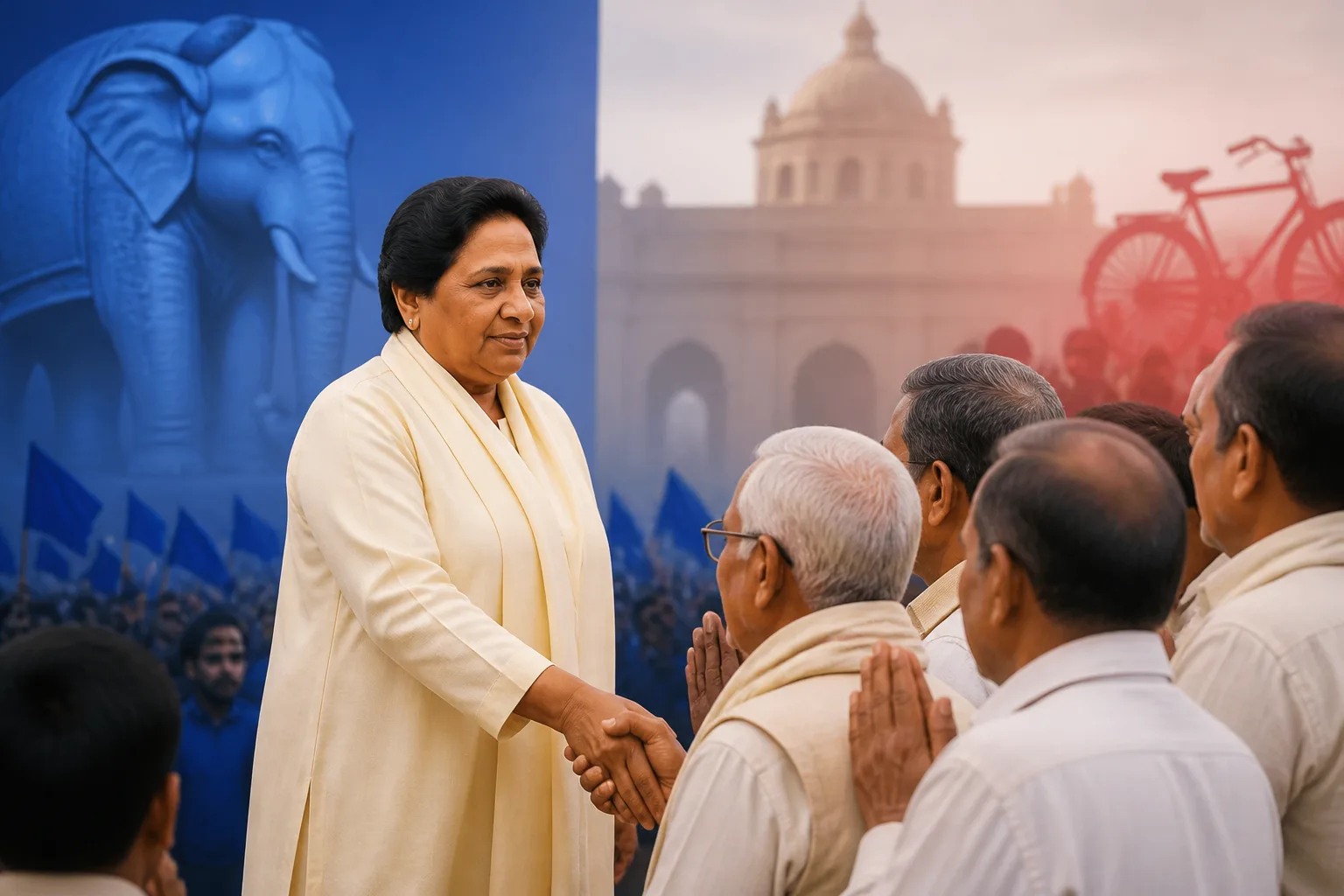
Mayawati has revived one of her party’s most familiar political tools, an appeal to Brahmin voters, as the Bahujan Samaj Party prepares for the 2027 Uttar Pradesh Assembly election long before the campaign formally begins. The move matters because it signals a fresh attempt by a weakened BSP to rebuild the broad caste coalition that once delivered it a majority in the state.
Early ticket moves point to a long campaign
The BSP has already named four candidates for the 2027 contest, including Brahmin and Muslim faces. Party sources have said Mayawati could announce more than 100 candidates by March, a sign that the party wants to lock in its field in advance rather than wait for the usual campaign rush.
Uttar Pradesh has 403 Assembly seats, and the BSP chief has been holding strategy meetings for several days. In those meetings, she has signalled that the party will fight on a Brahmin-Dalit alliance, with Muslims also treated as a major constituency.
That is a clear return to the social engineering model the BSP used most effectively in 2007, when it won 206 seats. The party’s old slogan from that cycle, built around Brahmin support for the elephant symbol, is expected to reappear at rallies ahead of 2027.
Mayawati turns Brahmin unease into a political message
Mayawati has been arguing that upper castes, including Brahmins, are safest under BSP rule. She has said rival parties are anxious because the BSP has begun fielding Brahmin candidates and has tried to present that concern as wider than a narrow party attack.
She has also pointed to complaints raised by Brahmin legislators from across party lines in the state capital, saying they had spoken about neglect and crimes against the community under the current government. Her message is simple, the BSP says it represented Brahmins properly in power and will do so again.
The party’s effort rests on memory as much as present-day organisation. Mayawati is trying to remind Brahmin voters of a period when the BSP’s coalition was broad enough to include Dalits, Muslims, OBCs and upper castes in one electoral bloc.
Why Brahmins matter to the BSP's revival plan
Brahmins are more than just another voter group in this contest. In the BSP’s 2007 rise, they were a useful bridge community, one that could influence how other castes voted. The party is again leaning on that logic, with Satish Chandra Misra, a Brahmin leader and longtime aide, expected to lead much of the outreach.
The stakes are higher now because the BSP has been trying to recover from years of poor results. Its return to Brahmin outreach suggests the party believes it cannot win by relying on its core base alone. It needs a wider bloc if it wants to challenge both the Samajwadi Party and the BJP.
- The BSP has named four candidates already for the 2027 Uttar Pradesh election.
- Mayawati has said Brahmin interests are safe only under BSP rule.
- The party is preparing to announce more than 100 candidates by March, if party sources are right.
- The BSP is reviving a caste alliance model that helped it win a majority in 2007.
A familiar playbook, with new pressure points
This is not the first time Mayawati has tried to rebuild her party through Brahmin outreach. In earlier rounds of state politics, the BSP used special Brahmin meetings and community-facing slogans to widen its support beyond Dalits. The party now appears to believe that same formula can still work, even after electoral setbacks and changes in the state’s political mood.
The timing also reflects the way other parties are already adjusting to the 2027 fight. As rival camps recalibrate caste equations, the BSP is trying to define the terms of the debate early. For Mayawati, the message is that her party alone can offer upper castes protection, representation and a place in government.
Whether voters buy that argument is a different question. But by opening this phase of the campaign so early, the BSP has made clear that it does not intend to sit out the next round of caste bargaining in Uttar Pradesh.
Sources
facebook.com
frontline.thehindu.com
millenniumpost.in
caravanmagazine.in
scholarship.claremont.edu
en.wikipedia.org
Frequently asked questions
What political strategy is the BSP reviving for the 2027 election?
The BSP is reviving a caste alliance model built around a Brahmin-Dalit alliance, with Muslims also treated as a major constituency. The party sees it as a return to the social engineering approach that helped it win in 2007.
How many candidates has the BSP already named for 2027?
The BSP has already named four candidates for the 2027 contest. These include Brahmin and Muslim faces.
Why is the BSP focusing on Brahmin voters again?
Mayawati is trying to rebuild the broad caste coalition that once gave the BSP a majority in Uttar Pradesh. The party says Brahmins and other upper castes are safest under BSP rule.
Who is expected to lead the Brahmin outreach?
Satish Chandra Misra, a Brahmin leader and longtime aide, is expected to lead much of the outreach. The article says the party is again leaning on him for this effort.
How many seats are there in the Uttar Pradesh Assembly, and how did the BSP do in 2007?
Uttar Pradesh has 403 Assembly seats. In 2007, the BSP won 206 seats.
Related
Stalin attacks Vijay government over Thirupparankundram order, says it endangers tradition, harmony and state rights
The row over the Thirupparankundram Deepathoon has moved from a temple dispute to a political flashpoint, with M. K. Stalin accusing Chief Minister Vijay's government of mishandling a sensitive issue and opponents warning the state is ignoring court directions.
Delhi Congress urges election body to extend SIR deadline as lakhs of voters seek reinstatement
With the claims and objections window closing on November 25, Delhi’s Congress unit is pressing for more time as the city’s special roll revision leaves hundreds of thousands still outside the draft list.
Andhra Pradesh’s 23 Urban Local Bodies Vote Again, With Turnout and Control of Town Halls at Stake
Polling on November 26 will decide 23 urban local bodies across Andhra Pradesh, with the TDP-led alliance looking to extend its recent sweep and the YSRCP trying to recover ground in a set of local contests shaped by higher turnout expectations, unopposed wins and closely watched civic strongholds.
Leah Blyth’s defection to One Nation exposes Coalition strains over discipline and direction
The South Australian senator’s move gives Pauline Hanson five senators and raises fresh questions about how the Coalition manages internal loyalty, election tickets and its message on energy and the economy.

No comments yet
Be the first to comment.
Join the conversation